skip to main |
skip to sidebar
3/3
 This is one of my top all-time favorite movies and here's why. We are drawn into another world, full of magic and wonder - dinosaurs are alive! - but with ever-mounting foreshadowing of trouble in every scene. Things get ugly and out of hand real quick.
At the time, early '90's, Spielberg's CGI was revolutionary. I daresay it's the first movie to every successfully employ computer graphics of this magnitude and the dinosaurs turn out very realistic and scary and a lot of fun to watch. I can't even imagine how long it took computers back then to process all that data.
Michael Creighton's theories are intriguing and backed by enough science to make it good science fiction. Just mix a little dino DNA you find in mosquitoes stuck in amber with frog DNA and bam, you get a new dinosaur. But, as with any Creighton story or Spielberg movie, Jurassic Park was about much more than just the thrill of the chases and the graphics.
For one, there was solid acting here. Sam Neill is a good hero: distant, cold, serious at first, all about science and no nonsense, but comes around in the end, as he gets to know the kids. His American accent comes off a little stiff and proper, but it works. Samuel L. Jackson (wait, he was in this movie?!) must have a clause in all his movies saying he's got to have a great line. Here, it was, "Hold on to your butts." And Jeff Goldblum was basically born to play this role: a smarmy, sarcastic, unkempt, pompous know-it-all who would get on your nerves in real life but who is fun to watch in a movie.
Secondly, the theme music was composed by none other than John Williams of Jaws, Star Wars, Indiana Jones, Harry Potter. It is now legendary. We played it in band in middle school.
Finally, there were some deeper questions raised with this movie, questions about the ethics of scientific experiments and exploiting nature in the name of business. Even if we can do something, we need to stop and think if we should or not. Is it a good idea to bring dinosaurs, huge, strong, ferocious animals, back into existence? We learn pretty quick that "life finds a way" and that nature usually wins out over man. As for a little writer/director commentary, the first person to be eaten by a dinosaur is the lawyer, as he sits on the toilet, crying for his mommy.
All in all, Jurassic Park is an unforgettable movie. The best Spielberg scene is when the T-Rex gives a loud roar amongst the ruin of the fossilized bones, as a the Grand Opening banner falls down in the background. Boom.
This is one of my top all-time favorite movies and here's why. We are drawn into another world, full of magic and wonder - dinosaurs are alive! - but with ever-mounting foreshadowing of trouble in every scene. Things get ugly and out of hand real quick.
At the time, early '90's, Spielberg's CGI was revolutionary. I daresay it's the first movie to every successfully employ computer graphics of this magnitude and the dinosaurs turn out very realistic and scary and a lot of fun to watch. I can't even imagine how long it took computers back then to process all that data.
Michael Creighton's theories are intriguing and backed by enough science to make it good science fiction. Just mix a little dino DNA you find in mosquitoes stuck in amber with frog DNA and bam, you get a new dinosaur. But, as with any Creighton story or Spielberg movie, Jurassic Park was about much more than just the thrill of the chases and the graphics.
For one, there was solid acting here. Sam Neill is a good hero: distant, cold, serious at first, all about science and no nonsense, but comes around in the end, as he gets to know the kids. His American accent comes off a little stiff and proper, but it works. Samuel L. Jackson (wait, he was in this movie?!) must have a clause in all his movies saying he's got to have a great line. Here, it was, "Hold on to your butts." And Jeff Goldblum was basically born to play this role: a smarmy, sarcastic, unkempt, pompous know-it-all who would get on your nerves in real life but who is fun to watch in a movie.
Secondly, the theme music was composed by none other than John Williams of Jaws, Star Wars, Indiana Jones, Harry Potter. It is now legendary. We played it in band in middle school.
Finally, there were some deeper questions raised with this movie, questions about the ethics of scientific experiments and exploiting nature in the name of business. Even if we can do something, we need to stop and think if we should or not. Is it a good idea to bring dinosaurs, huge, strong, ferocious animals, back into existence? We learn pretty quick that "life finds a way" and that nature usually wins out over man. As for a little writer/director commentary, the first person to be eaten by a dinosaur is the lawyer, as he sits on the toilet, crying for his mommy.
All in all, Jurassic Park is an unforgettable movie. The best Spielberg scene is when the T-Rex gives a loud roar amongst the ruin of the fossilized bones, as a the Grand Opening banner falls down in the background. Boom.
3/3
 This review has
simmered for a while but I finally decided it’s a three because of its unique
spin on this outbreak/super-virus/zombie theme. It was realistic and very
thoughtful/pensive/methodical/measured. The director, Steven Soderbergh, really strove to
make it play like it would probably work in real life, i.e. it wasn't science fiction. But beyond that, it
was the tale of the heroes in this world who risk their lives and reputations,
break convention, to do the right thing. We got lots of different
perspectives and levels of it, from top to bottom.
There were also bad guys: it was interesting that
the young journalist/blogger was made to be an antagonist and it showed how he
was really corrupt and used the public’s fear for profit, all while
manipulating their thoughts and exascerbating the problem. People directly died
because of the chaos he helped promulgate. Also, the unfaithful gambling
alcoholic wife had a lot of blame, as well as the multinational company she
worked for that was clear-cutting in the Third World. There was some real skepticism of goverment, politicians, the military and CIA as well.
In the end, the movie tells of how these heroes
worked to try to beat the virus, find practical solutions, and save the world, which is a
different ending to these kind of movies too: it was optimistic and provided
hope, which is refreshing. So even though this is not what I was expecting from
the title, I liked its overall message.
This review has
simmered for a while but I finally decided it’s a three because of its unique
spin on this outbreak/super-virus/zombie theme. It was realistic and very
thoughtful/pensive/methodical/measured. The director, Steven Soderbergh, really strove to
make it play like it would probably work in real life, i.e. it wasn't science fiction. But beyond that, it
was the tale of the heroes in this world who risk their lives and reputations,
break convention, to do the right thing. We got lots of different
perspectives and levels of it, from top to bottom.
There were also bad guys: it was interesting that
the young journalist/blogger was made to be an antagonist and it showed how he
was really corrupt and used the public’s fear for profit, all while
manipulating their thoughts and exascerbating the problem. People directly died
because of the chaos he helped promulgate. Also, the unfaithful gambling
alcoholic wife had a lot of blame, as well as the multinational company she
worked for that was clear-cutting in the Third World. There was some real skepticism of goverment, politicians, the military and CIA as well.
In the end, the movie tells of how these heroes
worked to try to beat the virus, find practical solutions, and save the world, which is a
different ending to these kind of movies too: it was optimistic and provided
hope, which is refreshing. So even though this is not what I was expecting from
the title, I liked its overall message.
3/3
The World's Greatest Dad is a smart and fresh comedy of the first class. It deals with life's realities in a funny way, which is certainly not something that's easy to accomplish. It makes you want to laugh and cry at the same time. Interestingly enough, this movie tackles the same topic as my last review, The Lovely Bones, (coping with the loss of a teenage child), but from a completely different angle.
 Robin Williams has dealt with depression and drug problems in the past, as well as recently. The character he played in this movie was a lot like him in real life: depressed from dealing with the stresses of life, yet funny. Williams has played diverse roles throughout his acting career (funny man, lunatic, family man etc), but I think this was his most heartfelt.
He was a writer who was mainly ignored. He was a teacher whose students didn't care. Most importantly, he was the father of a despicable son who was so awful that you wanted to punch him hard in the gut. But, everything changes when his son accidentally kills himself while self-asphyxiating and masturbating. What a way to go, and boy did he have it coming, no pun intended.
Since Williams' character loved his son, even if he didn't like him, he was devastated. And the scene where he finds his dead son would have been a major tear-jerker given Williams' raw and real emotions, had it not been for the director's insertion of an upbeat and seemingly out-of-place song (and actually the music throughout the movie did help keep the tone light, as the tone of any comedy should be). The only rational thing for Williams to do after having found his dead son would be to make this embarrassing (and grossly hilarious and almost deserved) accident look like an intentional suicide, right? So he zips up the kid's pants and sits down and writes his son's fake suicide note. It turns out to be so beautiful that the entire school is transformed by its message. Williams soon realizes that he has the power to rewrite his son's life and give him a new legacy.
So Williams can make his son all that he wished he was when he was alive: brilliant, compassionate, caring. What's more is that he finally has an audience for his own writing by literally ghost-writing through his son. He goes as far as reverse-plagiarizing his son's journal, which ends up getting national attention for its quality. It would seem like a dream come true to a father in this position. But oh how heavy the truth weighs on one's heart. You know that all the artificial good feelings must truly be empty because in reality, the son is dead and the son was a schmuck.
If it weren't for all that was subtly and overtly funny in The World's Greatest Dad, it would be a really sad drama. But Williams rescued us by making it his own, and kept us smirking. Thank God the tone wasn't too heavy. Other characters I liked were the son's best friend as well as the neighbor; I could tell that these were characters that the writer/director cares about and probably knows in real life in one form or another. The last minute of the film was my favorite. Watch this movie and you'll like it.
3/3
I've been an unashamed fan of Pixar movies ever since Toy Story came out and changed cartoons forever. Since Pixar has had Disney's endorsement (and has more recently been purchased by the film mega-conglomerate), its movies have all held the same charm and top-quality story. And one of the guys behind Pixar's success is Andrew Stanton, writer/director of Toy Story, A Bug's Life, and Finding Nemo. His latest is Wall-E, which is one of his best.
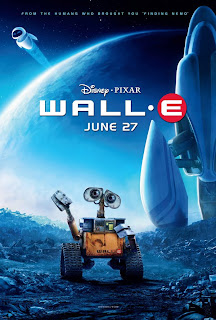 Now I've heard mixed reviews of this from friends. One friend said that their parents walked out half way through because it was awful, while another said that their parents watched it twice in the opening week. I knew that I had to see it for myself to find out what was up. Naturally, I was drawn to this movie (no pun intended) not just because it was a Pixar movie, but because its story takes place in a post-crisis Earth, and I have a thing for movies about the end of days.
Wall-E, this small cleaning robot, is the only thing left on Earth because every human abandoned the planet for a luxury spaceship when the Earth became too full of trash. So every day Wall-E gets up with the sun and goes to work, collecting and compacting mountains full of trash all by himself, working to help make Earth inhabitable once again. Obviously it's going to take some time.
Since Wall-E is geared towards a children's audience, our main character is loveable and everything ends happily. But there is so much depth here. For starters, somehow our man Stanton has written the protagonist without one word of dialogue, yet we know his thoughts and feelings based on facial expressions (if you call a pair of robot goggle-eyes a face) and machinery noise intonations. That's quite an accomplishment and it's unique, so major props.
Also, the animation is spotless and exciting. The images of an Earth buried under huge piles of trash very powerfully counteracts the clean beauty of unpolluted space. The ship where all of the humans are is quite creative, yet sad. In the many generations that humans have been away from Earth, on board this luxury cruiseline spaceship, they've gotten fat and dumb, even more so than they must have been on Earth. Even though the director claimed in his commentary that he didn't write this story to try to get across a political agenda, I can't help but see one. If we continue on this course of messing up our environment, we're going to be in big trouble one day.
Wall-E, because he has a true heart and fights for the right thing, ends up saving humanity and falling in love with a newer, high-tech girl robot. There are some great heart felt moments as well as some honestly funny scenes. Stanton remembers that grown-ups go see his movies too, so he throws in a few comedic 'carrots' for adults here and there (i.e. Sigourney Weaver does the voice of the ship's computer). Overall, I thought it was a great movie for everybody; Wall-E is an unbeatable story that makes you feel happy for watching, yet it carries a powerful message.
3/3
Avatar was destined to be one of those movies that was 'too big to fail,' but, unlike Wall Street banks, it didn't actually fail. All in all, this movie was a really spectacular occurrence and will turn out to be the jewel in James Cameron's directorial/writing crown, truly his best accomplishment yet.
 Yes, there was a mountain's worth of hype building up to its release, but I think it made the movie all the better. Sometimes lots of publicity is only a feeble attempt to glaze over a flimsy movie product, but this wasn't the case here. Well, on the contrary, most of the time, I like seeing movies that I've been excited about seeing for a long time. I've heard people compare Avatar to Star Wars and other life-changing, industry-revolutionizing film experiences that had similar hype; they are worth all of the buzz because they were so well made. Actually, I can't remember the last time I've been to a theater that was so packed. It was really an event.
The CGI/special effects were simply amazing. How does a director make a movie this stunning and beautiful? It was impossible to tell where the live action started and the computers took over, seriously. Pandora and everything on it was so real and awesome that it was sometimes hard to remember it was all fiction. The nature (both the plants and animals) was really neat and the Na'vi themselves were cool. Describing it like this doesn't do it credit, I don't think, but I'm no English major.
I couldn't help reading the larger message of the film that humans can be bad if they're driven only by profits and are too careless to see the good in nature. It was sad that Cameron's future Earth doesn't have any green, yet it was interesting that there's going to be a war with Venezuela and Nigeria.
The Na'vi seemed to be based off of a mix of Native American and African tribal culture. I'm not sure if I'm satisfied with the theory that humanoids from another planet would evolve culturally so similarly to humans. But, it also makes them recognizable and easier to swallow story-wise while at the same time parallelling the tragic history of human nature (i.e. the European destruction of indigenous populations in America and Africa).
Come to think of it, why do the Na'vi have fingernails? Are we supposed to buy that they evolved physically in the same way as humans too? What are the odds that foreign evolution would be so similar and would happen at the same time? I need commentary from a scientist. Also, I'm doubtful that humans will be so advanced (space flight to foreign planets, cryo freezing, curing spinal paralysis etc) in only 130 years yet the same clothing styles are still being worn. Other than these nit picky details, Cameron's Pandora and future were both very creative and I give him major props for thinking up such an awesome setting for this story.
I sort of lament the action/fighting third act. Ebert commented on it too (here), but felt that it was better than some. I mean it was such a cliche way to end it, but I suppose it had to happen. Why take a risk on making the third act unexpected with so much money at stake? I mean, I'll admit that I'd be upset if things didn't turn out in the romantic way (i.e. bad guys beaten, guy gets girl, good lessons learned etc etc). I guess I'm at peace with the ending, but definitely preferred the introduction when we are experiencing the new world from the eyes of our protagonist.
As with any major creative feat, there were many nods to other important films; the not-so subtle hints were fun to pick up on. The gung-ho colonel drinking a mug of coffee as he approaches the attack point in his bomber certainly reminded me of a similar scene in Apocalypse Now (which certainly exposed the many attrocities committed against native populations in the Vietnam War). Sigourney Weaver is an icon and reminds us of the sci-fi revolution that was Alien (and of her voice cameo role 30 years later in Pixar's Wall-E). The main character's adventure reminded me of a young Kevin Costner in Dances with Wolves. The list goes on...
All in all, Avatar was really cool, lots of fun, and exciting with a positive message and I'll leave it at that.
3/3
Sideways is a tragic story about middle-aged depression and the feeling of loss of value and love that comes with getting older. I liked this movie a lot, however, despite its sadness. It is expertly written and very smart. The acting is great too: I'm a huge Paul Giamati fan, not to mention great acting by the irresistible Sandra Oh and the funny Thomas Haden Church-- Virginia Madsen was charming. I also find the overall take-away message to be something meaningful.
 On the surface, it was kind of enjoyable listening to all the wine aficionado stuff. The writer obviously knew a lot about wine tasting in California and passed it on to Paul Giamati's character via flowery descriptions of pinots and cabernets.
The subtle, wry humor throughout, mixed in with some slapstick laughs (like the golf course scene, one of my favorites) was also great in this movie. I'm sure that this sense of humor isn't for everybody, but I admit that my movie taste is slightly offbeat.
But on a deeper level, I liked this movie because of what Giamati's character learns over the course of his adventure: to be honest and true to oneself, to not give up despite failure, and to cherish good relationships.
I think that the scene where Giamati and Maya are talking about why they like wine is pivotal. Their descriptions symbolize their own views on life. Paul says he likes good wine because it takes a lot of persistence and tough work to make it. It's not too difficult to see that his character is struggling to make his own life a good one through a lot of tedious, painful trying. Maya says she likes wine because a bottle is always changing and evolving in flavor over the years, as it ages. It must be taken advantage of while it's at the peak before it goes into a decline, she says. Their two perspectives on life mesh and Maya shows Paul that his life isn't over when you're middle-aged, rather, it's changing for the better.
In the end, good prevails. Giamati's friend (Haden Church) learns that he's actually very lucky to have a loving fiance and how he needs to mature a lot before he gets married. And Giamati gets over his failures and turns a new leaf over, though it takes an adventure and some pain to do it. In this way, I find it similar to the Spanish movie Lucia, Lucia, in which the middle-aged main character discovers joy in her life again after an adventure.
This was nominated for 5 Oscars and rightfully so.
3/3
I often tell people that The Matrix is my favorite movie of all times because I think it is; It is really tough for a movie buff like me to be able to pin down that one top top film to call the best, but I think that The Matrix is it for me. So I guess that makes it a pretty big deal. Recently I decided I'd better watch it again so that I could take notes and officially answer why. The following is what I came up with.
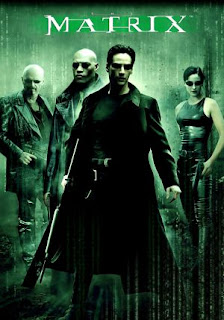 First off, The Matrix (1999) was one of the first rated R movies I saw, so it carries all that nostalgic coolness for me, much like how many guys my age feel about Boondock Saints I think. It was a really awesome movie for a 13 year old. The effects are amazing and were really truly revolutionary at the time (Not to mention the sweet music accompanying the effects-- i.e. Rage Against the Machine). The fight scenes where Neo dodges bullets and kills off dozens of bad guys before the dust has time to settle were simply unprecedented and spellbinding. The blend of martial arts and high technology was a unique idea that turned out to be incredible. Plus, this is the role that Keanu Reeves was born to play-- he can be stoic/reflective/pensive without worrying about killing the mood of the movie.
But I like this movie for more reasons than its special effects and heavy metal; now that I am no longer 13 and have a deeper appreciation for the story and the meaning behind it. There is an easy general Christian interpretation for this movie, as my former camp director told us at the religious summer camp I attended in middle school. A few examples: Neo is trapped in a life that isn’t the one intended (like people who haven't been "saved" yet); believing in something more than this life and being freed and becoming incapable of dying (believing in Jesus will save you and give you everlasting life in Heaven); the difference between "being shown the path and walking it" (how it's up to a Christian to walk in the light once he/she's accepted the truth); ‘The One’ will be the savior of humanity. Etc. etc. You don't have to snoop too hard to see these big themes. You can certainly appreciate this movie if you do not buy this interpretation however.
Which leads me to the next reason why I am in love with this movie. There is also a philosophical side to this movie, which Adriano Palma, my Philosophy 101 professor, liked to bring up in class- it's called existentialism. Descartes said that there is no way to tell what our reality actually is—either we are living the way our mind perceives we are, or we are only minds/consciousnesses held within a fake reality or a dream world, under the control of some mad scientist, (or AI machines who want to harvest humans for the electricity their bodies produce). How can we really know that what we perceive around us in our day-to-day lives is reality? Maybe we can't. We can only know that we think (I think, therefore I am/ I exist). The Wachowski Brothers went deep.
The deepness does not stop there, however. The Matrix also questions fate and whether or not we can control our own lives (i.e. the vase scene that represents how Neo cannot escape his own destiny of becoming The One, just like we can't control ours). Whether you agree or not, it's very Oedipus/Minority Report and is stimulating to contemplate. The movie also brings up the power and mystery of love (how nobody can tell you you’re in love, you just know it and how Trinity saves Neo at the end by confessing her love for him etc. etc).
It doesn't hurt that The Matrix is superbly written. It is gripping and the suspense builds as the truth of the Matrix unravels. There's a perfect natural draw towards rooting for Neo; I suppose we all can identify with the desire to be transformed from a cubicle-bound nobody into "The One." Now, Roger Ebert, my favorite professional movie critic, decries the so-called "cliched" 3rd-act fight sequence as a shame (here), but I think that it's one of the best parts of the movie. I can't see any other way to end the story than have Neo fight and defeat the agents, who represent the evil and cold-heartedness of the machines behind the Matrix. It's the fight between good and evil and you can't write your way around that.
Alas finally, I was drawn to The Matrix because of its post-apocalyptic setting and because of its ominous warnings about the dangers of AI. I have become sort of obsessed recently with Apocalypse stories recently considering they're hard to ignore these days. Although I don't believe we're anywhere near achieving AI, we do have reason to question its merits. Funny enough, my religious camp leader and philosophy professor both said that the Wachowski brothers probably didn’t intend for their movie to bring up either the Christian or Descartes’ point of view. But I have a feeling that they knew exactly what they were writing. They knew it was going to be way more than just a summer action blockbuster. And I dig it.
First off, The Matrix (1999) was one of the first rated R movies I saw, so it carries all that nostalgic coolness for me, much like how many guys my age feel about Boondock Saints I think. It was a really awesome movie for a 13 year old. The effects are amazing and were really truly revolutionary at the time (Not to mention the sweet music accompanying the effects-- i.e. Rage Against the Machine). The fight scenes where Neo dodges bullets and kills off dozens of bad guys before the dust has time to settle were simply unprecedented and spellbinding. The blend of martial arts and high technology was a unique idea that turned out to be incredible. Plus, this is the role that Keanu Reeves was born to play-- he can be stoic/reflective/pensive without worrying about killing the mood of the movie.
But I like this movie for more reasons than its special effects and heavy metal; now that I am no longer 13 and have a deeper appreciation for the story and the meaning behind it. There is an easy general Christian interpretation for this movie, as my former camp director told us at the religious summer camp I attended in middle school. A few examples: Neo is trapped in a life that isn’t the one intended (like people who haven't been "saved" yet); believing in something more than this life and being freed and becoming incapable of dying (believing in Jesus will save you and give you everlasting life in Heaven); the difference between "being shown the path and walking it" (how it's up to a Christian to walk in the light once he/she's accepted the truth); ‘The One’ will be the savior of humanity. Etc. etc. You don't have to snoop too hard to see these big themes. You can certainly appreciate this movie if you do not buy this interpretation however.
Which leads me to the next reason why I am in love with this movie. There is also a philosophical side to this movie, which Adriano Palma, my Philosophy 101 professor, liked to bring up in class- it's called existentialism. Descartes said that there is no way to tell what our reality actually is—either we are living the way our mind perceives we are, or we are only minds/consciousnesses held within a fake reality or a dream world, under the control of some mad scientist, (or AI machines who want to harvest humans for the electricity their bodies produce). How can we really know that what we perceive around us in our day-to-day lives is reality? Maybe we can't. We can only know that we think (I think, therefore I am/ I exist). The Wachowski Brothers went deep.
The deepness does not stop there, however. The Matrix also questions fate and whether or not we can control our own lives (i.e. the vase scene that represents how Neo cannot escape his own destiny of becoming The One, just like we can't control ours). Whether you agree or not, it's very Oedipus/Minority Report and is stimulating to contemplate. The movie also brings up the power and mystery of love (how nobody can tell you you’re in love, you just know it and how Trinity saves Neo at the end by confessing her love for him etc. etc).
It doesn't hurt that The Matrix is superbly written. It is gripping and the suspense builds as the truth of the Matrix unravels. There's a perfect natural draw towards rooting for Neo; I suppose we all can identify with the desire to be transformed from a cubicle-bound nobody into "The One." Now, Roger Ebert, my favorite professional movie critic, decries the so-called "cliched" 3rd-act fight sequence as a shame (here), but I think that it's one of the best parts of the movie. I can't see any other way to end the story than have Neo fight and defeat the agents, who represent the evil and cold-heartedness of the machines behind the Matrix. It's the fight between good and evil and you can't write your way around that.
Alas finally, I was drawn to The Matrix because of its post-apocalyptic setting and because of its ominous warnings about the dangers of AI. I have become sort of obsessed recently with Apocalypse stories recently considering they're hard to ignore these days. Although I don't believe we're anywhere near achieving AI, we do have reason to question its merits. Funny enough, my religious camp leader and philosophy professor both said that the Wachowski brothers probably didn’t intend for their movie to bring up either the Christian or Descartes’ point of view. But I have a feeling that they knew exactly what they were writing. They knew it was going to be way more than just a summer action blockbuster. And I dig it.


